
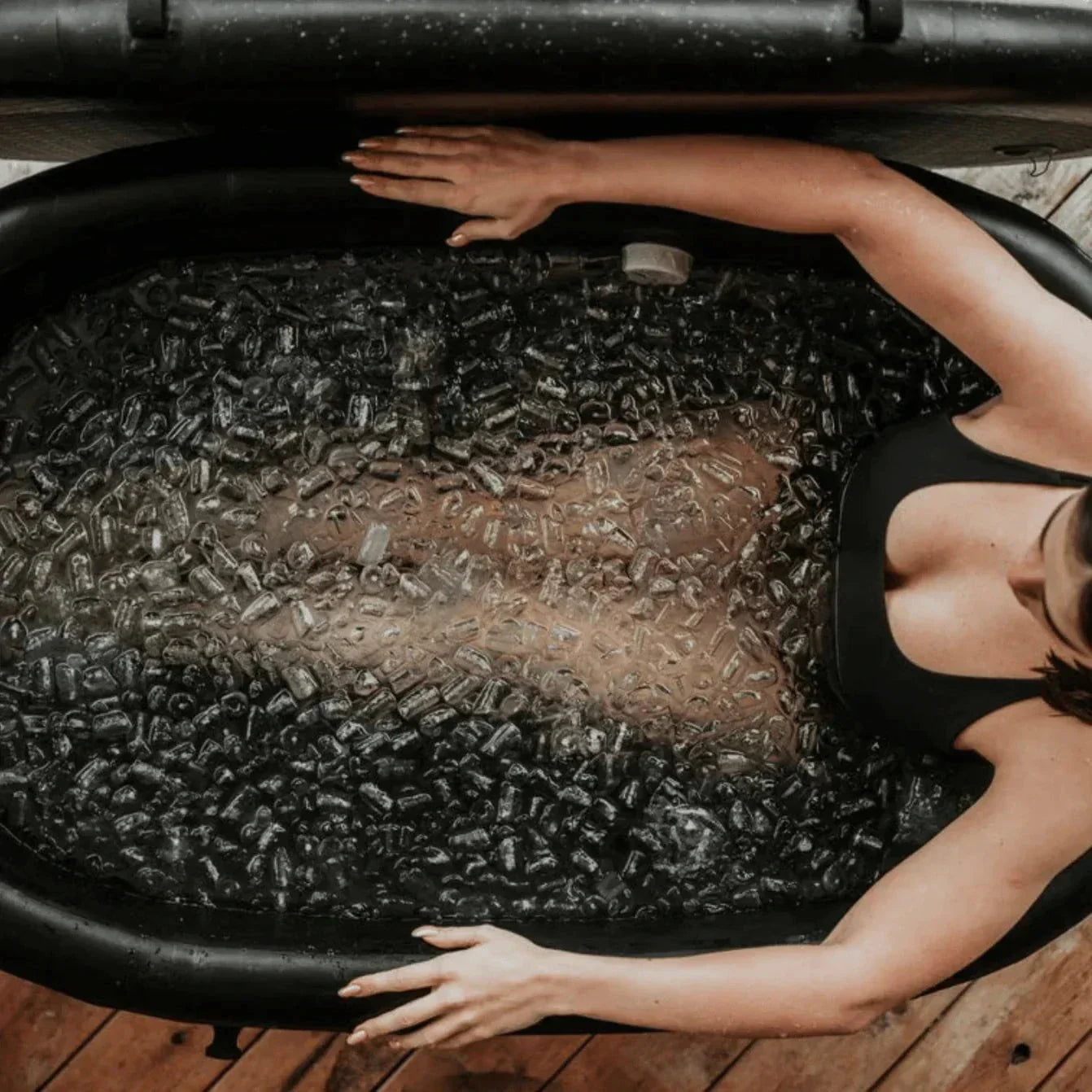
Many people try cold baths to relieve joint pain. But does it really work? And what does the research say?
Let's get straight to the point...
What is joint pain?
Joint pain = pain, stiffness, or inflammation in one or more joints.
Common in conditions such as:
-
Osteoarthritis
-
Rheumatoid arthritis
-
Gout
-
Overwork
-
Age changes
It can hurt when you walk, sit, stand... even when you sleep.
The pain can come on gradually or suddenly, and it often worsens in cold weather.
So why expose yourself to even more cold?
That's exactly what we're going to find out...
What happens to the body during a cold bath?
When you immerse yourself in cold water, several things happen immediately:
-
Blood vessels constrict – the body sends blood to the internal organs to keep you alive.
-
The nervous system kicks into gear – adrenaline, dopamine, and noradrenaline soar.
-
Inflammation is reduced – temporary cooling can reduce swelling and pain.
It's a bit like putting a large ice pack on your entire body.
Research: Do cold baths help with joint pain?
Yes – and no.
The science is somewhat divided. Here is what we know:
✅ Cold reduces inflammation
Cold baths (or cryotherapy) have been shown to reduce inflammatory markers such as CRP.
✅ Pain is relieved in the short term
Many studies show that cold baths provide temporary pain relief, much like a painkiller.
❌ The effect is individual
Everyone reacts differently. Some get quick relief – others feel nothing at all.
❌ Not a long-term solution
Cold baths do not treat the root cause of joint pain. They are more like a "quick fix."
According to research published in the Journal of Inflammation Research (2014), exposure to cold can lower inflammatory markers such as interleukin-6 (IL-6) and C-reactive protein (CRP).
Bleakley CM, Davison GW. "What is the biochemical and physiological rationale for using cold-water immersion in sports recovery ? " Journal of Sports Medicine. 2010;40(6):381-386.
It's impossible to know for sure in advance whether cold baths will help your joint pain – but there are some signs and factors that can give you a hint as to whether it's worth trying. Here's how you can think about it:
How do you know if cold baths can help with joint pain?
1. What type of joint pain do you have?
Inflammatory pain (e.g. rheumatoid arthritis, swollen and warm joints):
You may experience some relief as the cold reduces inflammation, but check with your doctor first.
Osteoarthritis (wear and tear):
Cold baths can temporarily relieve pain, but heat usually feels better.
You can try both – sometimes the body likes contrasts.
Does the cold already hurt?
If you are made worse by cold weather or feel uncomfortable when exposed to cold in everyday life – then cold baths are probably not for you.
2. How do you react to local cold?
Have you tried putting an ice pack on a sore joint?
If it feels good and the pain decreases for a few minutes – then a cold bath may be worth trying.
3. How is your general health?
-
Good blood circulation ✅
-
No heart issues ✅
-
You move around a lot every day ✅
Then there is a greater chance that the body will react positively to cold exposure.
4. Are you open to trying multiple times?
Cold baths don't always have an immediate effect. It may take 3–5 tries before your body relaxes enough for you to feel relief.
If you only try once and give up, then it's harder to know.
5. Can you combine it with movement?
The effect of a cold bath is often best immediately afterwards.
If you can do light exercise, mobility exercises, or gentle stretching exercises after the swim, then you can enhance the relief.
Cold bath + joint pain = Worth trying?
Yes, if you do it correctly.