
Have you also heard the talk about how cold can be magical for recovery? Maybe you've seen influencers standing in clouds of smoke in some kind of sci-fi machine... or tough athletes sitting in ice baths with ice cubes up to their chins.
But what is the difference between cryotherapy and ice baths ? And what works best – for the body, but also for the puzzle of life?
Let's figure it out 👇
🔍 What is cryotherapy?
Cryotherapy means "cold treatment." You enter a specially built chamber where the temperature is between -85 to -110 degrees (!).
You're in there for only 2-3 minutes, often wearing wool socks, gloves, and ear and nose protection. Yes, that sounds crazy cold. And it is . But it's quick.
The purpose? To "shock" the body a little—in a good way. It gets the blood circulating, reduces inflammation, and releases endorphins. Kind of like an internal wake-up call for the entire system.
🧊 What is an ice bath?
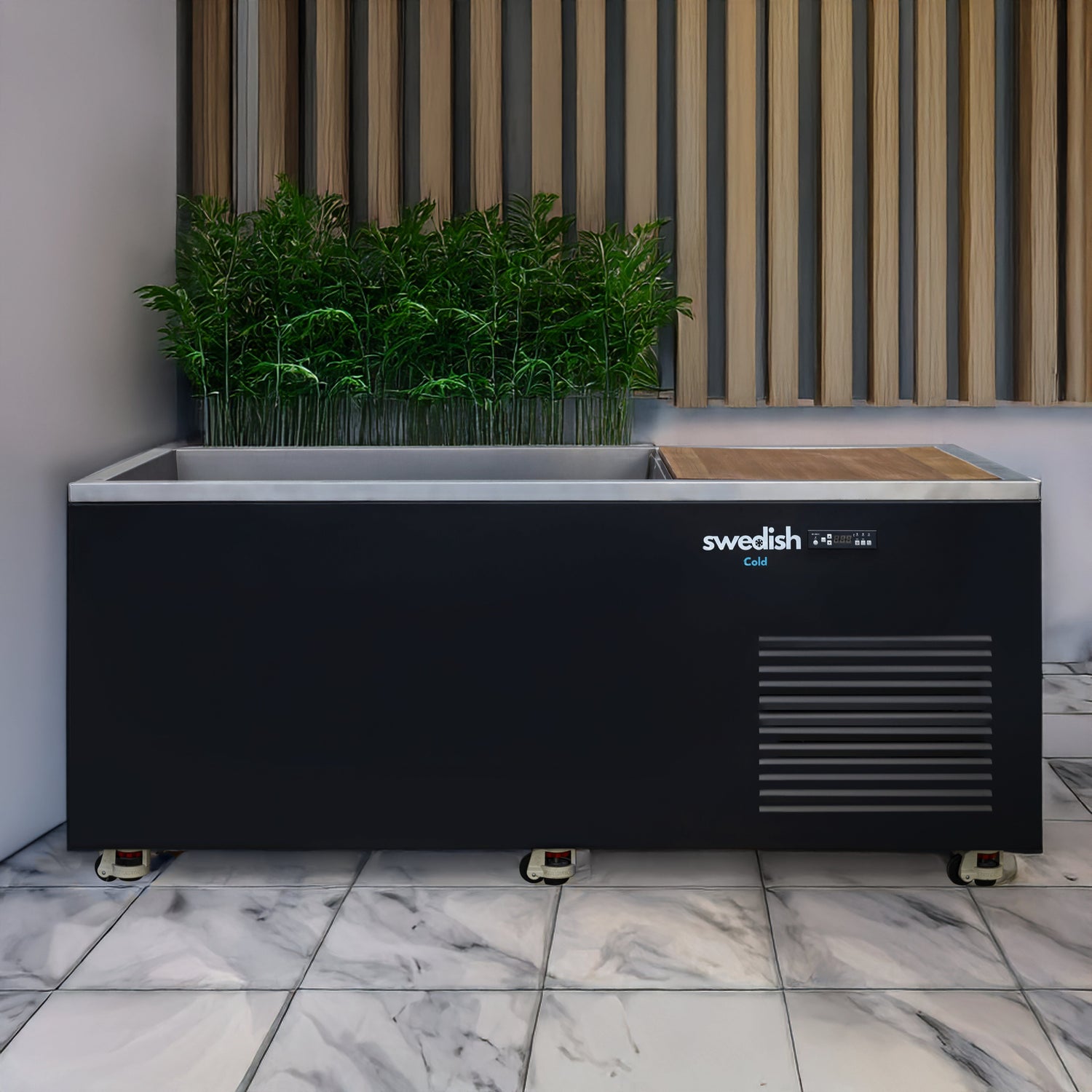
Ice baths are exactly what they sound like: you immerse your body in water that is around 5–10 degrees , sometimes even colder. Swedish Colds Generation 5, for example, cools down to 0 degrees! Here you decide how long you stay – but between 1 –5 minutes is common.
Unlike cryotherapy, ice baths feel more... real to us. You feel the water against your skin. You freeze! And you have to breathe through the panic that comes first. It's both a physical and mental challenge.
🧠 Body and brain – what happens in both?
Both cryotherapy and ice baths speed up similar processes:
-
Blood vessels constrict → inflammation decreases
-
Blood circulation increases afterwards → the body heals faster
-
Endorphins kick in → you feel better
-
Stress levels decrease → if you learn to breathe through the cold
But there are also important differences...
⚖️ Cryotherapy vs ice bath – the differences you actually care about
|
Category |
Cryotherapy |
Ice bath |
|
Time |
2–3 minutes |
5–10 minutes |
|
Temperature |
-85°C to -110°C (dry air) |
5–10°C (wet, cold water) |
|
Experience |
More "lab feel," quick shock |
More natural, slower cooling |
|
Availability |
Requires special equipment and clinic |
Can be done at home with a cold bath |
|
Good for: |
Recovery, endorphins, pain |
Recovery, endorphins, pain |
|
Mental focus |
More passive – you stand still |
Requires breathing and mental training |
|
Environmental aspect |
High electricity consumption |
Low impact – just water and possibly ice |
|
Child-friendly |
Not for children. Not even close. |
Not for children either – but you can explain and show |
💬 So… which is best?
It depends on what you are looking for.
Select cryotherapy if:
-
You have a tight schedule and want quick results
-
You can afford to pay for sessions regularly
-
You like the feeling of "high-tech wellness"
-
You want a milder mental challenge (shorter shock)
Opt for an ice bath if:
-
You want to be able to do it at home (preferably on a routine basis)
-
You like to challenge yourself mentally
-
You want low-cost options
-
You like the natural, body-hugging
🧩 Personal reflection – I tried both
I tried cryotherapy once at a clinic in Stockholm. I was freezing like hell but felt great afterwards. But… it felt a bit impersonal. Quick in and out. Not much feeling.
Then I tried an ice bath at home. I filled the bathtub with ice-cold water and was about to regret it right away. But after 2 minutes – wow. My body felt alive. I breathed deeply. My head became calm. Maybe for the first time all week. And it was free .
🤓 What does the research say?
The science is pretty clear: both methods work – but in different ways.
-
Cryotherapy has been shown to help with joint pain , muscle recovery , and sometimes even sleep disorders .
-
Ice baths have a strong link to reduced inflammation , a calmer nervous system , and improved stress regulation .
According to studies, the mental training involved in an ice bath is actually at least as important as the physical training. Being able to stand in the cold, breathing through the discomfort... it does something to your whole body.
💡 Tips if you want to try it yourself
Do you want to give cold a chance in your everyday life? Here are some tips:
For ice baths at home:
-
Start with 10–15°C water – work your way down
-
Sit for 2 minutes the first time
-
Take long, deep breaths
-
Please put on some calm music.
For cryotherapy:
-
Check reviews before you book
-
Wear dry clothing and protection as instructed
-
Don't eat right before – some people get dizzy
💬 Summary: Cryotherapy vs ice bath – the winner?
There is no universal winner. Both work well. But the question is how easy is it to have your own cryochamber at home?