
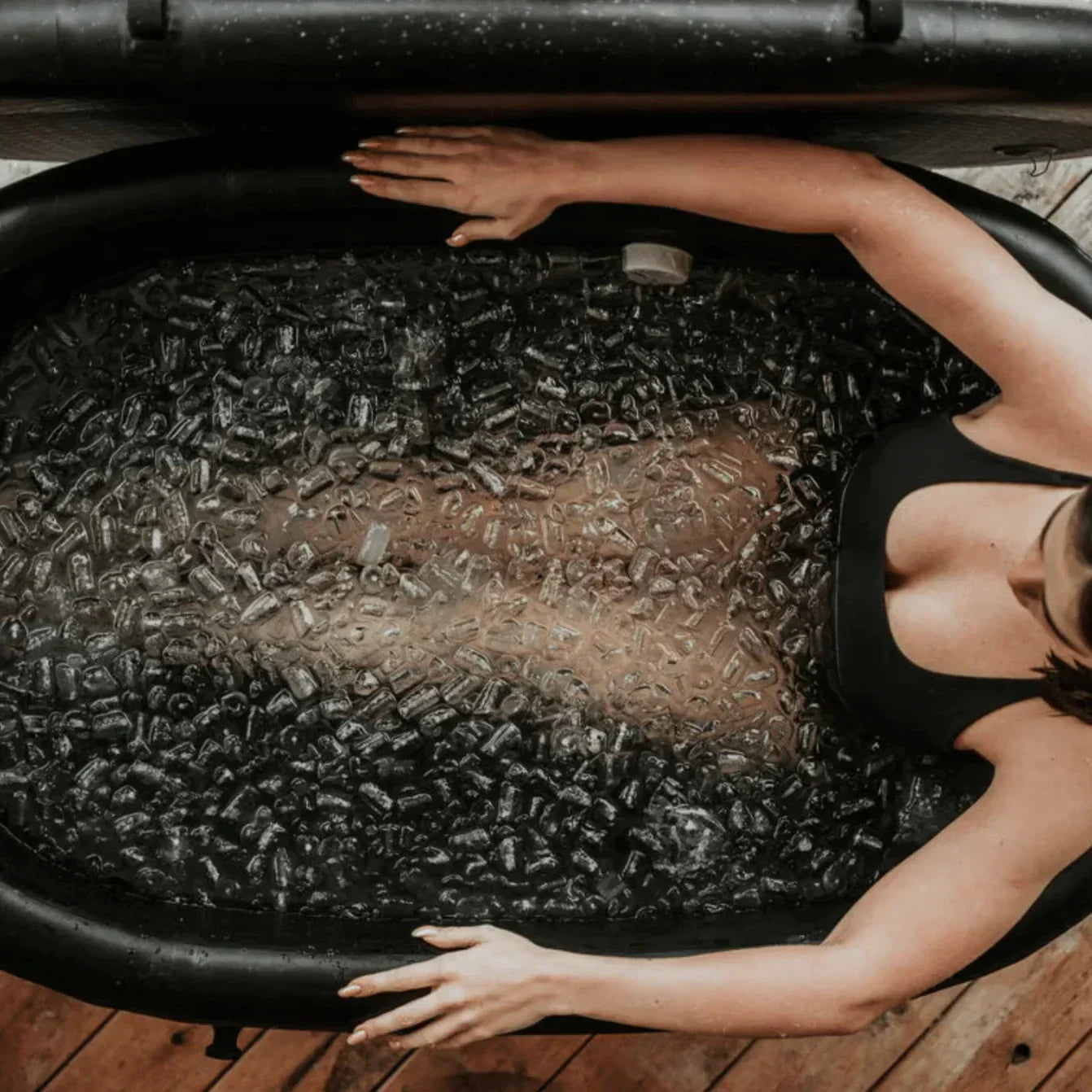
Plunging into icy water has become something of a ritual for everyone from elite athletes to stressed-out office workers. But one question that often gets a sloppy answer is: How cold should a cold bath be?
It's not about swimming in water that's as cold as possible. On the contrary – the temperature controls the entire experience and effect. Having control over the degrees is crucial to getting the right response from the body: relaxation, recovery, mental sharpness or just pure discipline training.
So when people say:
“I'm going to jump into the ice and stay there for 20 seconds”
then it is often more ego than effect.
Why temperature in cold baths is anything but a detail
The temperature of the cold bath determines:
-
What effect you get (relaxation, recovery, focus or discipline).
-
How long can you stay in.
-
How the body, brain and nerves react.
Different goals require different temperatures. Many people think the colder the better – but in reality it’s about balance . Not about suffering.
Temperature zones: from beginner to veteran
| Temperature (°C) | What the body does | Recommended time | For whom |
|---|---|---|---|
| 15–12 | Mild cold, muscle contractions | 5–10 minutes | Beginner, mental recovery |
| 11–8 | Breathing increases, the nervous system is activated | 2–5 minutes | Experienced bathers |
| 7–4 | Strong cold response, shivering | 1–3 minutes | Experienced, athletes |
| 3–1 | Near shock, rapid pulse | 0.5–2 minutes | Very used to |
| < 0 | Extreme cold, real ice bath | Maximum 1 minute | Elite-controlled sessions |

Swedish Cold Generation 5 — Challenging the market with -1 - 8 ºC . As most commercial systems cannot handle temperatures below 3°C.
Temperatures for different effects
You should not only consider how cold you are swimming – but why you are swimming. Below you can see which temperature suits different goals:
| CASE | Temperature (°C) | Effect |
|---|---|---|
| Relaxation & sleep | 13–15 | Activation of the parasympathetic nervous system, reduced heart rate and stress level |
| Mental clarity & focus | 12–13 | Dopamine boost, increased alertness |
| Training recovery | 10–12 | Reduced inflammation, restored blood circulation |
| Stress management & breathing | 9–11 | Nervous system training, calm breathing under pressure |
| Mental discipline & perseverance | 4–8 | Cortisol regulation, strong mental training |
| Cold as shock therapy | 0–3 | Maximum adrenaline response, for habit |
Keeping track of your levels means you don't waste the effect you want – whether you're struggling with muscle soreness or sleepless nights.
Cold bath vs ice bath: What is the difference in degrees?
-
Cold bath : 10–15°C. More bearable, longer duration. Provides calm, recovery, focus.
-
Ice bath : 1–5°C. Short exposure. Activates shock response, adrenaline, pain regulation.
Therefore, longer time at the right temperature provides more:
-
The body has time to activate the parasympathetic nervous system – which calms you down.
-
Hormones like dopamine and serotonin increase after 3–5 minutes , not immediately.
-
You have time to teach your body to breathe through the discomfort – not run away from it.
-
Cooling at 12°C is sufficient to reduce inflammation and provide mental sharpness, without causing panic.
Summary: Why temperature control is important
-
Effect and tolerance are controlled by the temperature level.
-
Individual adaptation – men and women react differently.
-
"Always below 5°C" is not the goal – balance is often better.
-
Being able to adjust to freezing temperatures is unique – Swedish Cold makes it possible to test levels step by step.
-
Research indicates the best effect between 10–15°C – the rest comes with practice, discipline and the right tools.
.
Safety first – the cold is powerful, not playful
Cold baths are not a competition to see who can last the longest. Especially not at first. It's easy to want to push yourself – but your body needs to get used to them gradually.
Listen to the signals: if you start to freeze uncontrollably, lose sensation or become dizzy – get up immediately.
Best? Start with short dips, preferably with someone nearby. It's both safer and smarter. The cold can work wonders, but only if you treat it with respect.